GMail is open for everyone!

February 7th, 2007

After a while where subscriptions were only possible in certain countries, GMail has recently announced that it opened registrations for users from across the globe. It has even posted a “Sign up” link on their front page. This comes after GMail experienced problems with German and British domains. Get your address for free, here.

Ultra smartphone trends - We’re bored of them before they reach the market

February 7th, 2007

iphone.jpg

Along with the iPhone came a new trend that has taken over just about everything. First, there was the “How’s it going to be like?” stage, when no details were revealed to anyone, and dozens of mockups (some closer to reality, some purely fictional) hit the internet, powered by curiosity. Earlier this year, everyone tuned in to MacWorld, where Steve Jobs presented the long-awaited product. Every detail, every photo and every single aspect of the long-awaited “iPod phone” (as Jobs himself says, iPhone is the best iPod they ever made) was covered in thousands of newspaper articles, tv shows, blog posts and so on.

The iPhone hasn’t reached the marked by now, and still there are a couple of rumours regarding (virtual) competitors. Driven by the media attention that the iPhone is getting, rival companies have started work on their own “iPhone”.

meizu-m8-cellphone.jpg

The first one sounds more like a joke than a real thing. It seems that, with some 4 months before the iPhone’s release to the masses, the japanese guys from Meizu created a phone that is almost a hundred percent identical to the iPhone. The photos show a smaller phone, with the icons placed in the same way (one icon has the Windows symbol on it, but the writing is in Chinese, so I can’t understand anything from it), with strikingly similar features (except from what looks like a small secondary camera on top). This is said to be the Meizu M8, and it’s, in my opinion, just an attempt to get some spotlight from the real thing.

asus-aura-concept-phone.jpg

Another “would-be” product that caught my eye is the Asus Asura, which is still in a concept phase. Azura has a design which is similar to the iPhone’s design, but in the same time it manages to bring something different to the table. It appears to be a normal, sliding phone (Although I’m not quite sure how this slidin mechanism will look like - it isn’t very clear from the photos), but what it has new is a QWERTY-type keyboard that popsout from one side, allowing the user of the phone to type a lot easier. Between the two models, I would say the latter has a real shot of success, but unfortunately it’s still in a design stage.

As I’ve said, the iPhone hasn’t even been launched to the general public, and already companies are rushing to copy its design and features. This might make it the best selling phone so far, or it might mean that users will get bored of it even before its launch.

The voice recognition website and its vulnerabilities

February 6th, 2007

midomi.jpg

The other day I stumbled upon midomi, a website that’s based on a brilliant idea. You know the times when you know a song by it’s rhythm, but not by its name? The website allows you to search through tunes by humming a part of the song, or directly by typing its name. I’ve tried out midomi and, honestly, I found no replies that matched the song I was singing. Well, to be entirely honest, I have no singing voice whatsoever, so that must be the reason for my bad search. But the website has its vulnerabilities, which I’m going to point out next:

1. The human factor
As it is the case in every project that relies on people, this website is no exception, and is exposed to human error. I’ve encountered several renditions that were far from perfect. Songs that are interpreted awful, or that are interpreted good but the background noise is too loud that it will disrupt any search. Plus, I’ve found songs by Eminem sung by girls, songs by Madonna and Fergie sung by men, and so on.

2. The machine factor
As it is the case with mobile phones, where, in order to access a Voice Tag, you have to repeat yourself several times, this type of search isn’t a hundred percent perfect. Even if you have tried your best to make the song sound as close as possible to the real thing, chances are that, even if the right search is displayed, it might be behind a dozen other bad results.

record.jpg

3. The spam factor
This is a constant threat to every person that runs a website nowadays. YouTube has plenty of spam (may it be in its videos, or in the users’ mailboxes, as I’ve come to know when I received a couple these past few weeks), and it is a much larger company. I haven’t found any spam messages, but I’m sure that, as the website will gain in popularity, they will appear. I’ve also run a small “experiment”, I’ve recorded a piece of a song (with my bad voice and all), and submitted it. No moderation, it went directly into the archives, waiting to be found by the next person. With this in mind, it would be fairly easy for somebody to add a piece of recording that can be described as spam.

With this in mind, I think that midomi.com will spend some time in Beta, as they have plenty to work on.

The PC vs Mac ads return - now from the PC’s perspective!

February 5th, 2007

We’ve all seen the PC vs Mac ads by Apple, there are plenty of them. But now it’s time for the PC to counterattack, with the help of director Laurie McGuinness, who created four small hilarious clips, with the same character personalities (the PC being older, “boring”, and the Mac being younger and cooler), but this time the Mac doesn’t get the spotlight. What I liked about the clips is that they’re not made in order to harm the Mac, and they don’t deny the qualities portraied in the Mac ads, but they observe the PC’s own qualities, without denying the Mac’s. So, without more description, here are the clips:

At work


Read the rest of this entry »

Meet the phone that’s as good looking as the iPhone, but impossible to manufacture.

February 4th, 2007

tinywhite.jpg

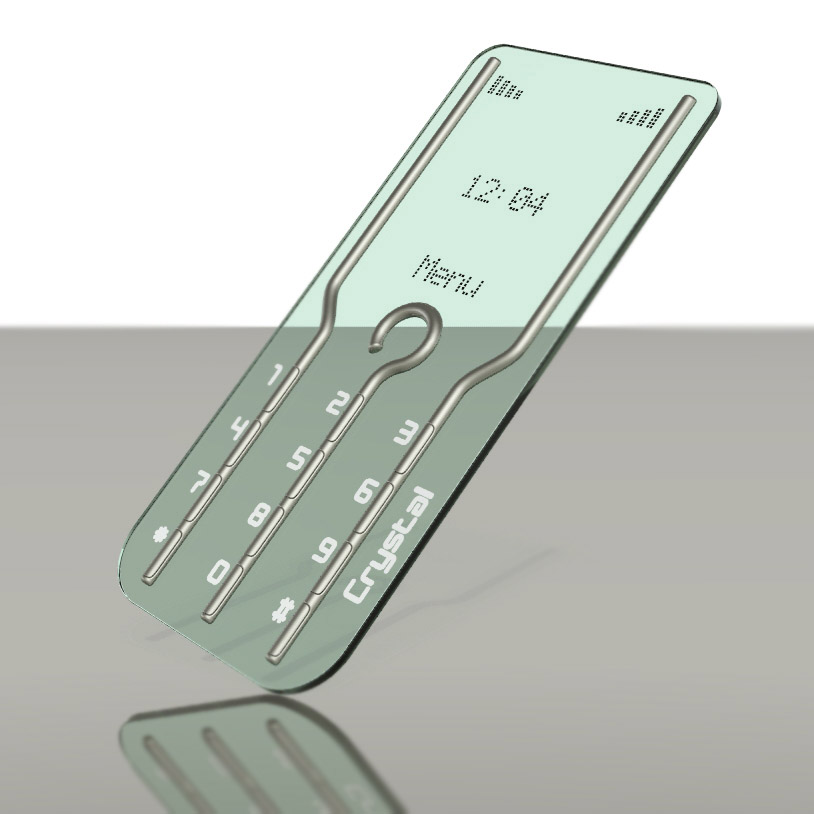
My first impression was “Wow.”. Some time ago I’ve shown you some pics of Rune Larsen’s two concept phones, and I mentioned that the smaller one would be close to impossible to manufacture, with today’s technology. Well, Rune didn’t give up and he continued his designing, and now he released the “Crystal Phone”, which is amazing, but I don’t see any way it could be fabricated. On your right is a new picture of the Tiny Phone, all white and better designed than the first black pics. And below you can watch the Crystal Phone. As slim as a credit card, this is an awesome concept, but, unfortunately, it’s close to impossible to fabricate.

crystal.jpg

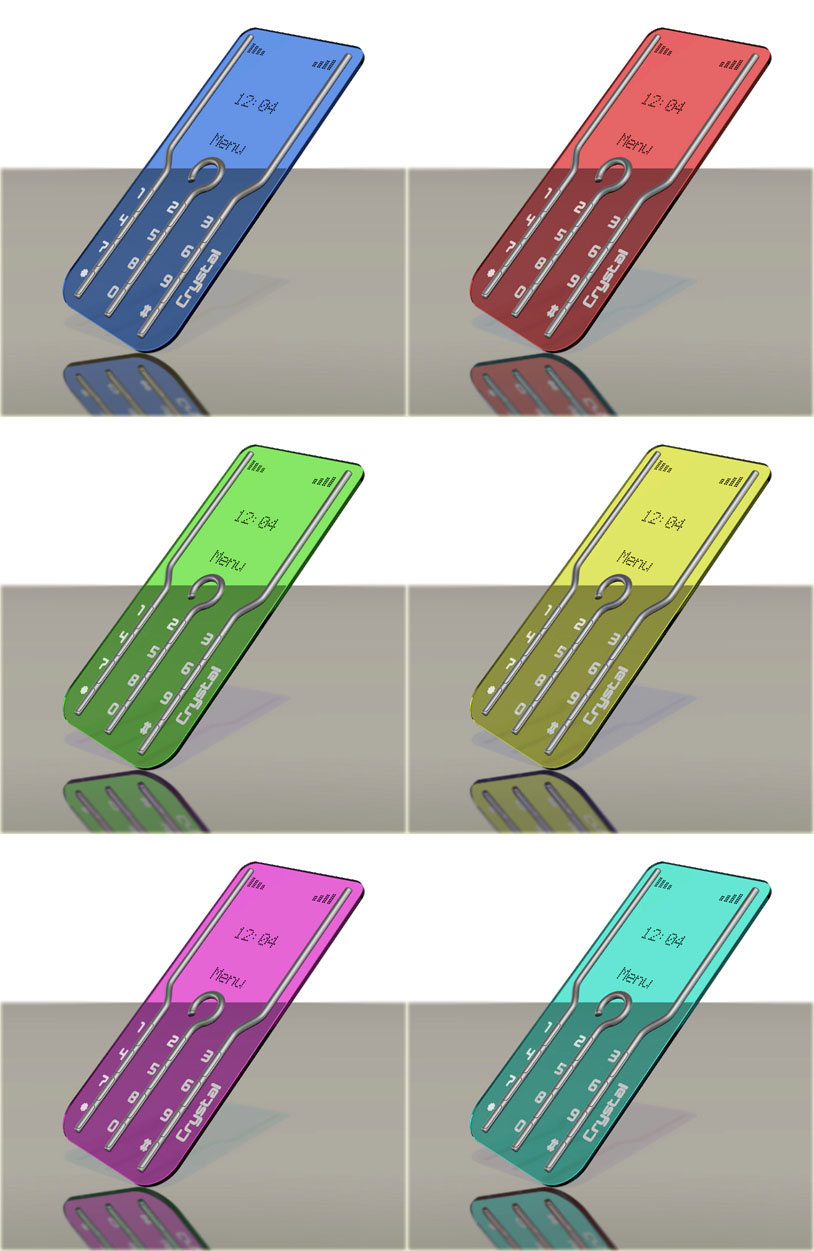
I’m officially a fan of Rune’s work, and hopefully his designs will get more and more “doable” as time passes. Here are more pics of the Crystal Phone, this time in colour:

127fs4354068.jpg

Searching tips for lazy people: Use “all-in-one” websites

February 3rd, 2007

I’m lazy, there’s no doubt about it. And I don’t have a state of the art PC, so I can’t afford having a lot of tabs / windows open. So, when I want to search something, it can be a pain having to search through a couple engines (unless I’m really lazy and use ChaCha), even if I most rely on Google. But if you don’t, here’s how you can speed things up a bit, by searching through a couple websites at a time.

srchr.jpg

SRCHR is one site that handles several search engines at a time. It’s got loads of engines for you to choose from, and all searches come up at once, so you don’t even need to browse through the different engines on the page. You can customize the page, with whatever engines you want, including several Yahoo and Google searches, plus other engines, stored in different categories: News, Web, Video, Image, Shopping, Bookmark, Social, Blog, Job, Event, and Other (which only includes Google Base and Wikipedia - strangely, Wikipedia has the Yahoo! “Y!” icon). The downside is that, due to the massive use of AJAX, the page moves terribly slowly, especially if you’re using a slower machine, or if you’re using a lot of tabs / windows.

dogpile.jpg

Dogpile is a similar website, which searches through the major search engines, Google, Yahoo!, msn Search and Ask.com. Its interface is much lighter than SRCHR’s, but the range of search engines is smaller. When you type in your search, a list of finds is shown along with the names of the search engines the object was found in. (Also note the way the way this was all integrated into the theme, by replacing Search with “Go fetch!”. Plus, the dog on top’s tail wags from time to time)

crossengine.jpg

But I must say that the best website that fits here has got to be CrossEngine. It’s, in a way, a combination between the two websites above, but a combination of the good things in each one. It has the complexity of SRCHR and the smoothness of Dogpile. CrossEngine is, as you’ve guessed, a way you can search through tons of search engines at once. The default search made is in Google, but you have a multitude of engines too choose from, so much in fact that naming all of them would bore you to death here (better check it out yourself). The website is extremely clean (it’s actually a bar at the top of the page that allows you to switch between engines), and I was impressed with the arrangement and categorizing of the engines. It could and will save you the time, given the chance.

Bill Gates: Vista is so secure it could run life support systems.

February 1st, 2007

While on a visit in Romania, where Bill Gates participated in the celebration of 10 years since the Microsoft branch has been running there, and the launch of Vista, Microsoft’s president declared that, with the right amount of administration, the new Vista could run life support systems in hospitals. Here is a fragment from the interview:

Journalist: Let’s imagine a hospital where life support systems are running Vista. Would you trust it with your life?

Bill Gates: Security has been the top priority for Microsoft for quite some time and that’s why I put out a key call for us to focus on that in a very big way over three years ago, and that’s why we’ve made investments like having people from Gecad ( Romanian company ) join on the security action from Microsoft. The answer to your question is that, absolutely, Vista is the most secure operating system we’ve ever done, and if it’s administred properly, absolutely, it can be used to run a hospital or any kind of mission crytical thing. But it’s not as simple as saying “If you use Vista, that happens automatically”. The issues about patient records and who should be able to see them, the issue about setting up a network, so that authorized people can connect up to that hospital network, the issue about having backup power, so that the computer systems can run even if the generators go down. There are a lot of issues to properly set up that system, so that you have the redundancy and the security walls to make sure it fullfils that very crytical function. So we are working with partners to raise their skills to make sure that when get involved in an installation like that they can make it secure. So I feel better about Vista than any other operating system, but there’s a lot of things that need to be done well, and we’re certaintly committed to step up and make sure these security issues are ieasier and better understood.

This could be the truth or it could be one man’s opinion. You can download the above segment of the interview here. (Big thanks to Alex Radescu for the recording)

But the real question that I must ask is this: Would YOU put your life in Vista’s hands? Do you trust it enough?

blue_screen_of_death.gif

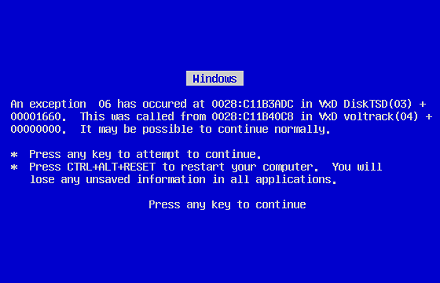
This would really give a new meaning to the “Blue Screen of Death